
APIs & Data Models
REST and GraphQL APIs with clean, versionable data models — a stable contract between your backend, your apps, and every third-party system that connects later.
REST and GraphQL APIs, microservices, and databases — built in Go, .NET, and Node.js on Google Cloud Run, ready to grow with you.
No obligation · Reply within 24 hours (Mon–Fri) · Straight from development, not from sales
Four building blocks, one goal: a backend that stays fast, secure, and maintainable as your product grows.
REST and GraphQL APIs with clean, versionable data models — a stable contract between your backend, your apps, and every third-party system that connects later.
Services written in Go, .NET, or Node.js and deployed on Google Cloud Run — they scale up automatically under load, scale to zero when idle, and keep your cloud bill predictable.
Payment providers, external APIs, industry formats: we process DATEX II charging-point data in production and build integrations with retries, monitoring, and clean error handling.
Authentication and authorization with proven flows — Firebase and Supabase auth or token-based access for your own APIs — plus encryption in transit and GDPR-compliant data handling.
Four of our own products, over 500,000 combined downloads. Behind three of them are backends we built end to end — geo-fencing for time tracking, a .NET system for AFIR and DATEX II charging data, Go geo calculations on Cloud Run for Klaimo — while the Android-native auto dialer shows that sometimes the best backend is none at all.
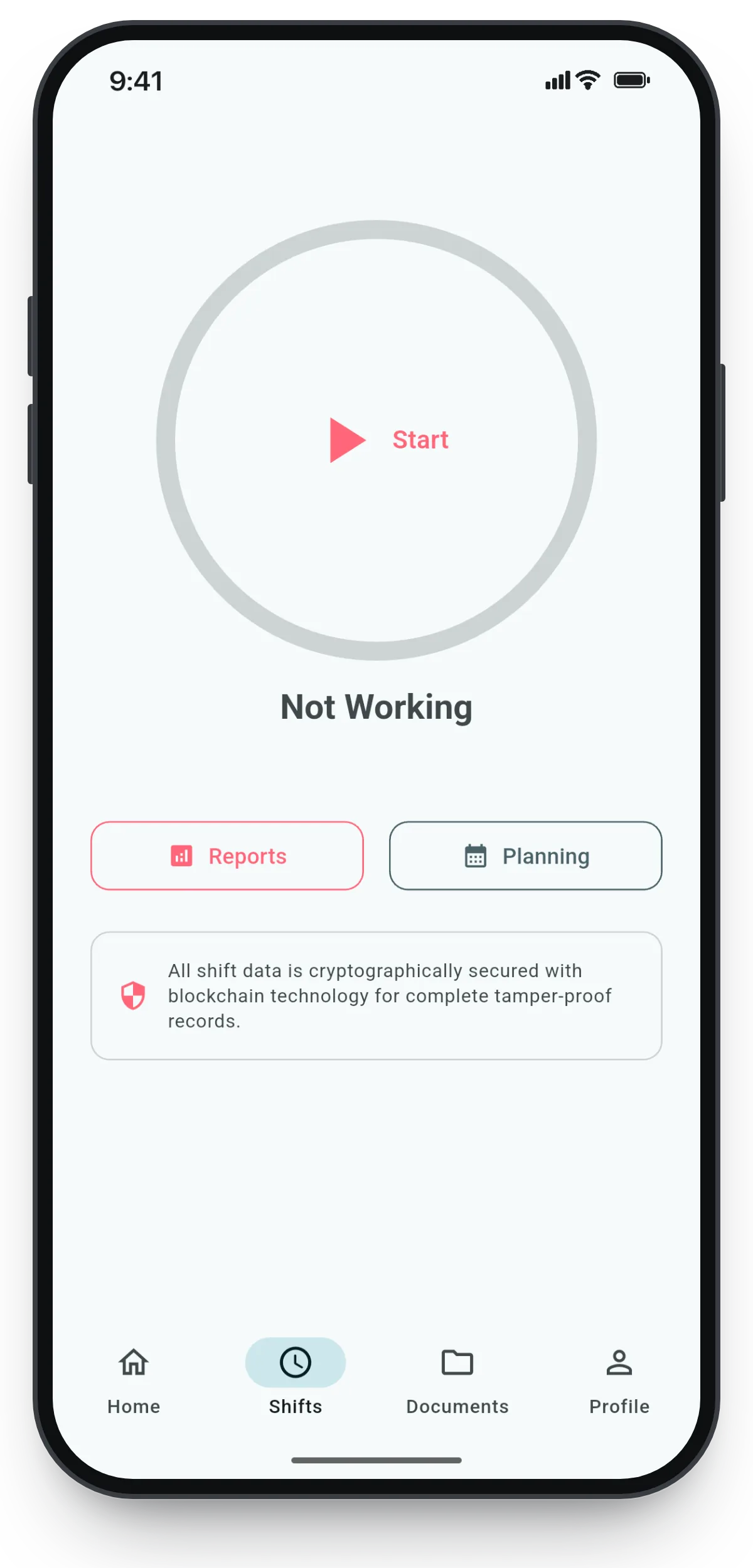
Cloud-based time tracking with geo-fencing — built for teams spread across several sites and held to strict compliance rules.
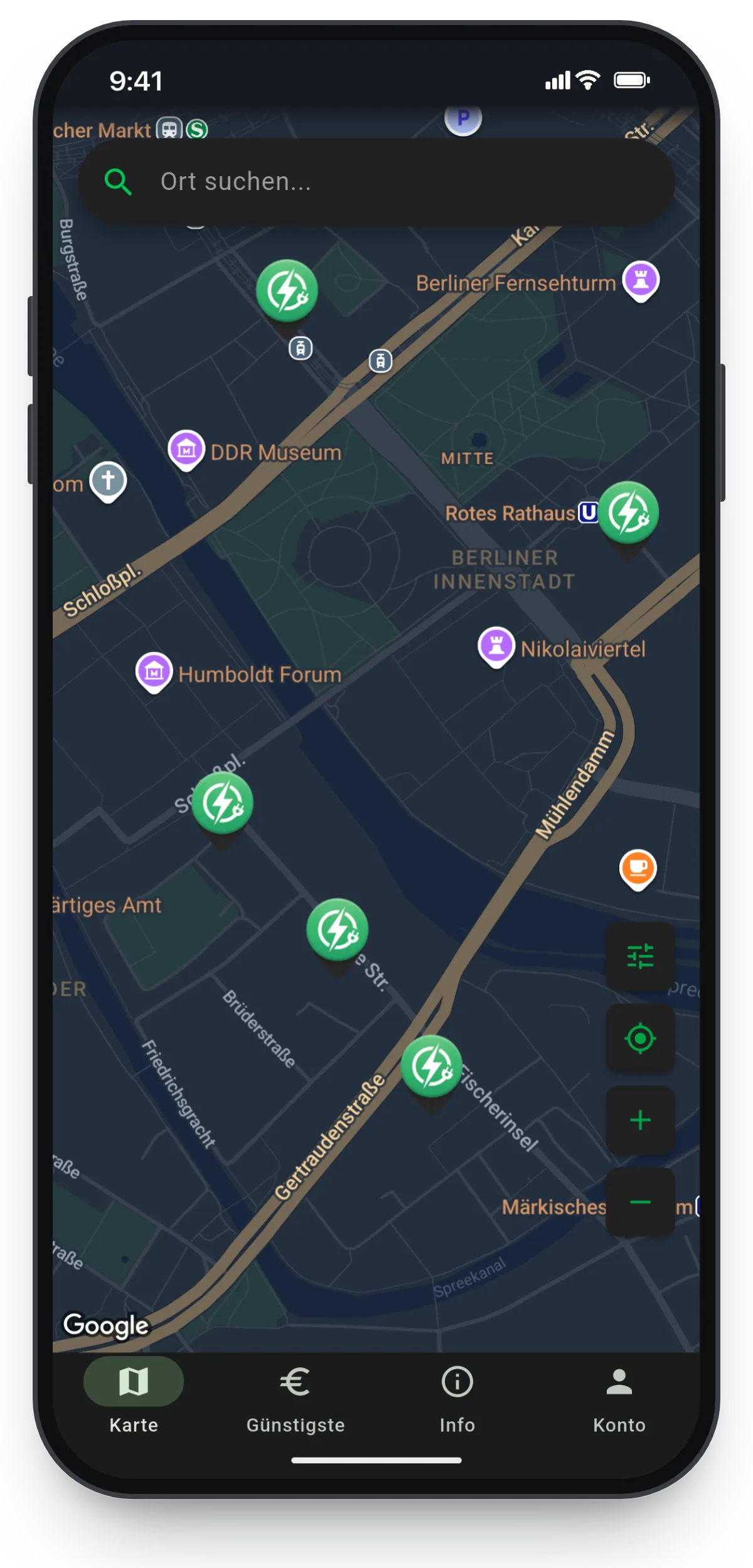
Real-time transparency on charge points and electricity prices, built on AFIR-compliant DATEX II data.
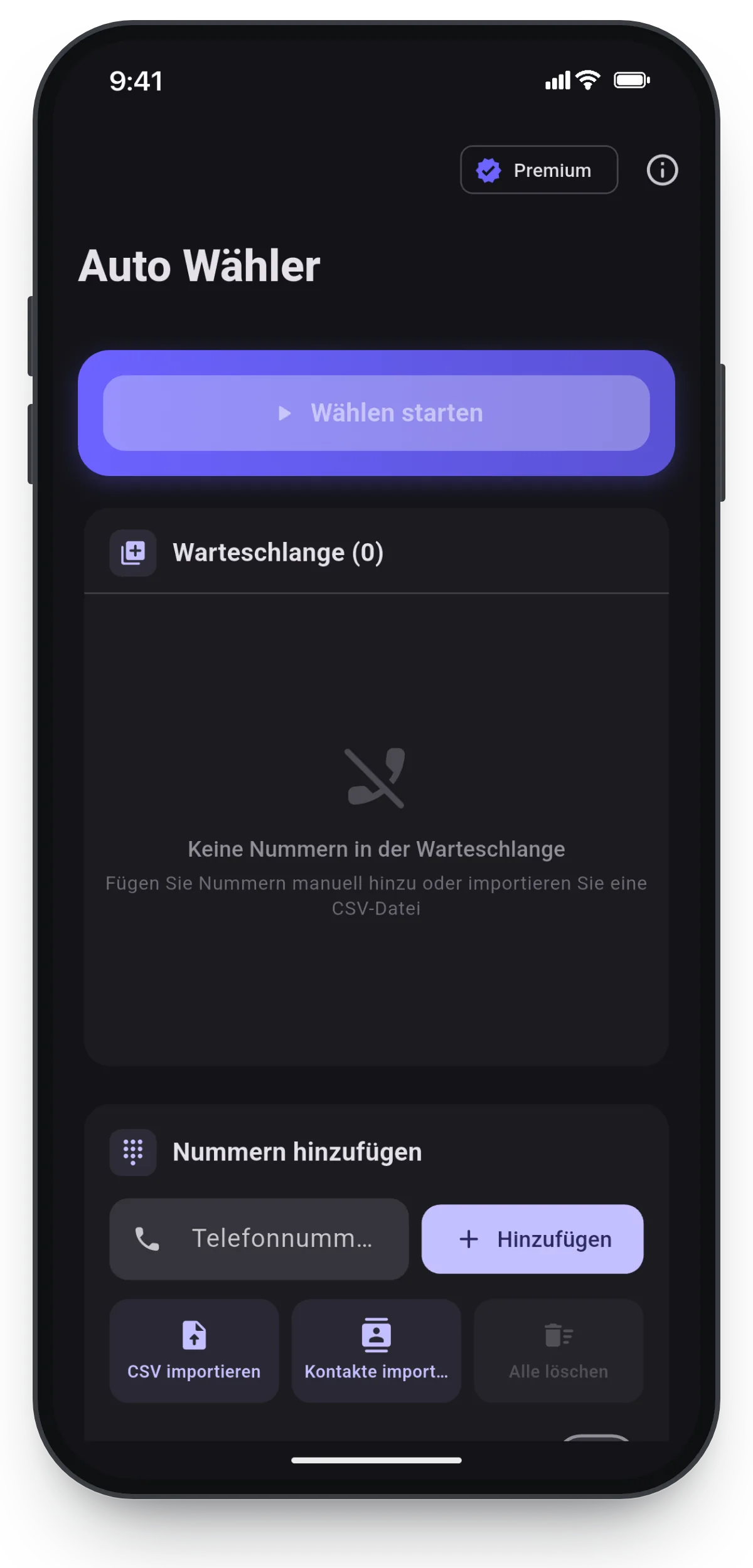
An Android app that works through entire call lists on its own — wired straight into the operating system's telephony stack.
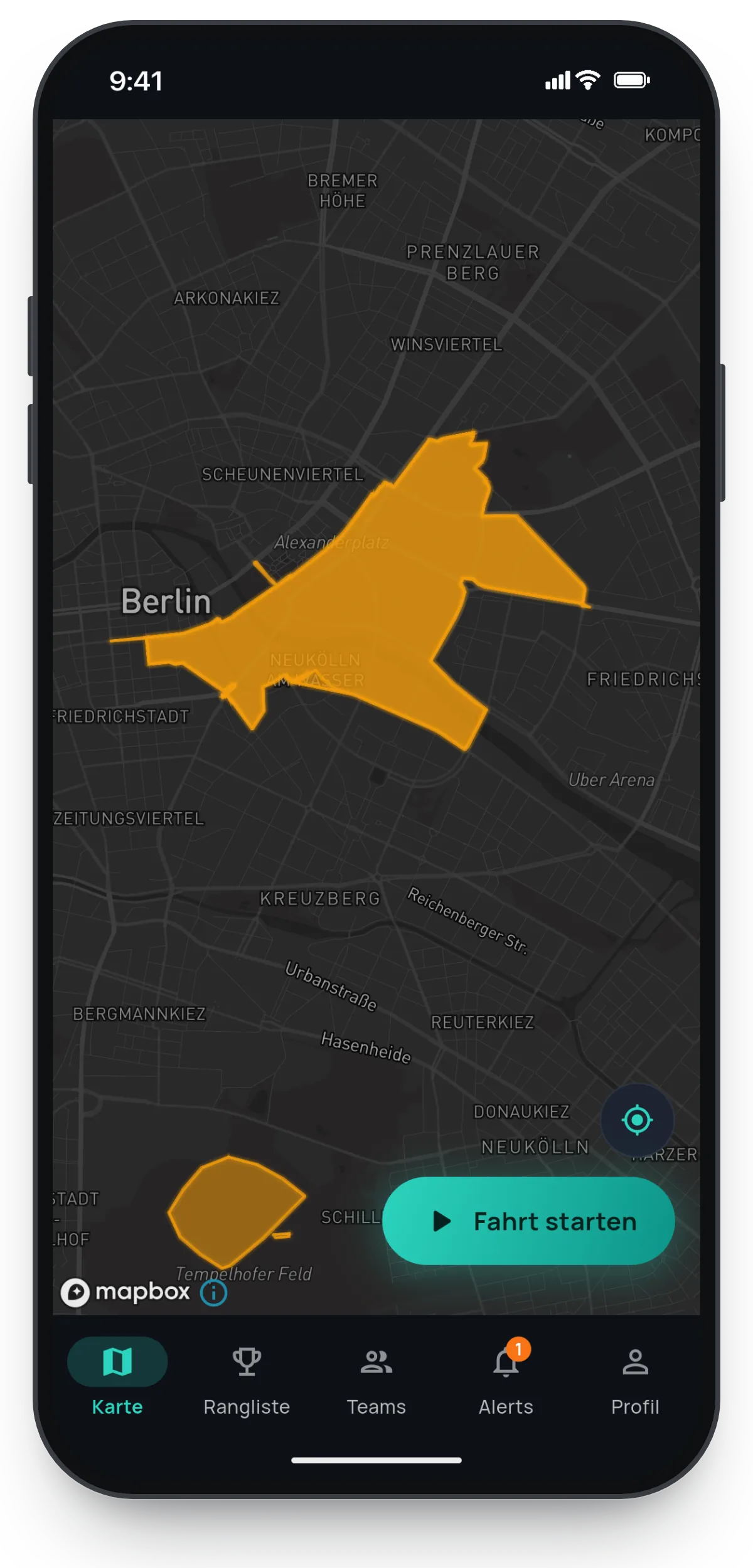
A bike-tracking app where every ride claims real territory on the map — with leaderboards, teams and a live map.
From architecture to a price you can plan with
Off-the-shelf backends and no-code platforms get you started fast — until your product needs something they were not designed for. Custom pricing logic, geo calculations, a data standard your industry requires: that is usually the point where workarounds pile up and monthly fees climb. A custom backend turns this around. We model your data the way your business actually works, expose it through clean REST or GraphQL APIs, and keep every layer open for what comes next. And because you get 100% code ownership, you are never locked into a vendor, a platform — or us.
We keep the process lean. At the start we clarify what the backend has to do: which clients consume it — a mobile app, a web app, third-party systems — how much traffic to expect, and which data needs to live where. Then we design the architecture and build in short iterations, so you see working endpoints early instead of waiting months for a big reveal. Our stack is deliberately proven rather than fashionable: Go, .NET, or Node.js on Google Cloud Run, plus Firebase or Supabase where a managed platform saves time and budget. Services deployed this way scale automatically with demand — and scale back down when things are quiet, which keeps operating costs low.
What determines the price? Mostly three factors: the number and complexity of endpoints, the integrations involved, and the requirements around security and compliance. A lean MVP typically lands between €2,700 and €6,000. A full business application with roles, dashboards, and several integrations usually runs €7,000 to €13,000. Complex systems — real-time data pipelines, high-volume APIs, or industry standards such as DATEX II — start at €20,000. You get a clear quote before development begins, we answer every inquiry within 24 hours from Monday to Friday, and at the end the code belongs entirely to you.
Four steps from idea to release — with clear milestones and a working build at every stage, so you always know exactly where your project stands.
Goals, scope and architecture defined properly — including an honest read on effort, risks and the budget range.
Clear, usable interfaces that make sense without a manual.
Frontend, backend and APIs in clear milestones — after every step you get a version you can actually run.
Testing, store release and a clean handover — full source code included.
Every project is different, but you deserve a real number before the first call: three realistic price ranges to orient you — your actual cost range is fixed before the project starts, not after.
Proven technology instead of experiments at your expense — chosen for what your project actually needs.
Cross-platform frontend for iOS and Android
Auth, real-time data and backend logic
Scalable services, built with Go and .NET among others
Direct access to the operating system
Interactive maps and geodata layers
Subscriptions, monetisation and insights
We build backend services in Go, .NET, and Node.js, deployed on Google Cloud Run. Where a managed platform makes sense, we use Firebase or Supabase for auth, storage, and realtime data. The choice depends on your project: Go for performance-critical services such as geo calculations, .NET for data-heavy business systems, Node.js when your team already lives in the JavaScript ecosystem. You get a clear recommendation — with reasons — before we start.
Both are solid — the right choice depends on who consumes your API. REST is simple, cacheable, and ideal when endpoints map cleanly to resources. GraphQL shines when several clients — say a mobile app and a web dashboard — need different views of the same data without over-fetching. We have shipped both and will recommend the option that keeps your clients fast and your backend maintainable, not the one that happens to be trendy.
Cloud Run runs your services as containers that scale automatically with traffic — more instances under load, down to zero when nothing happens. You pay for actual usage instead of idle servers. We design services stateless so scaling works without surprises, and place databases and caching behind them accordingly. It is the same setup we run our own products on, so the pattern is proven in production, not just on paper.
Yes — integrations are a core part of our backend work. In our charging and electricity price app we process DATEX II data from charging-point operators, a demanding European standard for traffic and infrastructure data. The same approach applies to payment providers, CRMs, or any external API: clearly defined interfaces, retries and error handling for unreliable endpoints, and monitoring so you notice problems before your users do.
Every backend we ship includes proper authentication and authorization from day one — token-based access for APIs, role checks in the business logic, and encrypted connections throughout. Depending on the project we use Firebase or Supabase auth or implement custom flows. Data handling follows GDPR requirements: we store only what is needed, where it is allowed. Security is part of the architecture, not an afterthought bolted on before launch.
Our price ranges are transparent: an MVP typically runs €2,700–€6,000, a full business application €7,000–€13,000, and complex systems with real-time data or industry standards start at €20,000. The main cost drivers are the number of endpoints, the integrations, and the security requirements. You get a clear quote up front and 100% ownership of the code at the end — no license fees, no lock-in.
Tell us what you are building. We reply within 24 hours (Mon–Fri) with an honest assessment — and if we are not the right fit, we will say so. The initial consultation is free.
📅 Book a free consultationSB-Techworks · Karim Belkacem · Lilienthalstr. 38, 93049 Regensburg, Germany · remote, on-site meetings by arrangement